
Choosing the right garden shed for your lawn mower can feel overwhelming. With so many options out there, it’s important to consider your specific needs, the type of mower you have, and the space available in your yard. This guide will help you navigate through the various types of sheds, their materials, and how to maximize your storage space effectively.
Key Takeaways
- Consider your space requirements when choosing a garden shed for your lawn mower.
- Different materials like wood, metal, and plastic each have their own benefits and drawbacks.
- Accessibility features are essential for easy maneuvering of your mower in and out of the shed.
- Maximize storage with organizational tools, vertical racks, and hooks to keep everything tidy.
- Weatherproofing your shed can protect your mower from the elements and extend its lifespan.
Finding The Right Garden Shed For Your Lawn Mower
So, you’re on the hunt for the perfect garden shed to house your trusty lawn mower? Awesome! It’s a great way to protect your investment and keep your yard looking tidy. Let’s break down what you need to consider to make the best choice.
Assessing Your Space Needs
First things first, how much space are we really talking about? It’s not just about the mower, is it? Think about those extra garden tools, bags of fertilizer, or maybe even a potting bench you’ve been dreaming of. Measure the area you have available in your yard and then estimate the volume of stuff you want to store. Don’t forget to account for some wiggle room to move around comfortably inside the shed. Nobody wants to feel like they’re playing Tetris every time they grab the weed whacker!
Understanding Shed Materials
Okay, let’s talk materials. You’ve got a few solid options here, each with its own perks and quirks:
- Wood: Classic look, can be customized, but needs regular upkeep.
- Metal: Durable and often more affordable, but can rust if not properly treated.
- Plastic: Low maintenance and weather-resistant, but might not be as sturdy as wood or metal.
Consider your budget, the climate you live in, and how much time you’re willing to spend on maintenance. For example, resin sheds are a great low-maintenance option.
Evaluating Accessibility Features
Now, this is super important: How easy is it to get your lawn mower in and out of the shed? A wide door opening is a must, especially for riding mowers. Think about a ramp or a threshold that’s flush with the ground to avoid any awkward lifting or maneuvering. Trust me, your back will thank you! Also, consider the placement of the door – will it swing open and block a pathway, or will it allow for easy access? These little details can make a big difference in the long run.
A well-placed and easily accessible shed can transform your lawn care routine from a chore into a breeze. It’s all about making life easier, right?
Types Of Garden Sheds For Lawn Mowers
Okay, so you’re ready to pick out a shed! That’s awesome. Let’s run through the main types you’ll find. Each has its own vibe and strengths, so you can find one that fits your needs and budget. It’s all about finding the perfect match for your lawn mower and your backyard.
Wooden Sheds For A Rustic Look
Wooden sheds are super popular, and it’s easy to see why. They look great! They bring a natural, rustic feel to your yard that other materials just can’t match. Plus, you can paint or stain them to match your house or landscaping. They’re also pretty strong and can last a long time if you take care of them.
Here’s the thing, though: wood needs love. You’ll have to stain or seal it every few years to keep it from rotting or getting eaten by bugs. And, depending on the type of wood, they can be a bit pricier than other options. But if you’re after that classic look and don’t mind a little upkeep, a wooden shed could be perfect. You can find a variety of sheds for sale to match your style.
Metal Sheds For Durability
If you’re all about low maintenance and long life, metal sheds are worth a look. They’re usually made of steel or aluminum, and they’re built to handle all kinds of weather. You won’t have to worry about rot or pests, and they’re fire-resistant, which is a nice bonus.
Metal sheds are often more affordable than wood, too. The downside? They can sometimes look a little… industrial. And they can get hot inside during the summer. But hey, you can always add some ventilation! Plus, they might not be as customizable as wood sheds. But if you want something tough and easy, metal is a solid choice.
Plastic Sheds For Low Maintenance
Plastic sheds are the ultimate in low maintenance. They’re made from durable plastics that won’t rust, rot, or fade. You can literally hose them down to clean them! They’re also lightweight, so they’re easy to move around if you decide to rearrange your yard.
They’re generally the most affordable option, which is a big plus. Now, they might not be as strong as wood or metal, and they can sometimes look a little… well, plastic. But if you’re on a budget and want something that requires basically zero effort, a plastic shed is a great way to go. Plus, they come in all sorts of sizes, so finding one to fit your lawn mower should be a breeze.
Choosing the right shed material really comes down to your personal priorities. Think about what matters most to you – looks, durability, maintenance, or cost – and you’ll be well on your way to finding the perfect home for your lawn mower.
Maximizing Storage Space In Your Shed
Okay, so you’ve got your shed. Awesome! But now it’s time to make sure you’re actually using all that space efficiently. It’s easy for a shed to become a black hole of forgotten tools and half-used bags of fertilizer. Let’s turn that around! Think of your shed as a blank canvas – ready to be organized into a storage masterpiece. It’s all about smart planning and a few clever tricks.
Organizational Tools And Racks
First things first, ditch the leaning tower of tools in the corner. Invest in some good organizational tools. We’re talking about racks for your rakes and shovels, pegboards for smaller hand tools, and maybe even a rolling toolbox for your lawn mower maintenance gear. Trust me, seeing everything neatly in its place will make you feel like a storage genius. Plus, you’ll actually be able to find what you need when you need it! Don’t forget about smaller items; things like seeds, nails, and screws can easily get lost. Use small containers or jars to keep them organized and accessible. This way, you can maximize shed storage and keep everything in its place.
Vertical Storage Solutions
Don’t just think about the floor space – look up! Vertical storage is your best friend in a small shed. Install shelves along the walls to store pots, planters, and other gardening supplies. Consider a loft area if your shed has enough height; it’s perfect for storing seasonal items like holiday decorations or camping gear. Here are some ideas:
- Shelving units: Adjustable shelves are great for customizing storage.
- Wall-mounted brackets: Ideal for hanging bikes or ladders.
- Overhead storage: Lofts or platforms for less frequently used items.
Utilizing Shelves And Hooks
Shelves and hooks are the unsung heroes of shed organization. Install heavy-duty shelving to hold heavier items like bags of soil or fertilizer. Use hooks to hang everything from hoses and extension cords to smaller tools like trowels and pruning shears. Get creative! Think about what you use most often and make sure it’s easily accessible. A well-placed hook can save you from digging through a pile of stuff every time you need your gloves. It’s all about making your shed work for you, not the other way around.
A good rule of thumb is to declutter before you organize. Get rid of anything you don’t use or need. Donate it, sell it, or toss it – just get it out of your shed. This will free up a ton of space and make the organizing process much easier.
Weatherproofing Your Garden Shed
Okay, so you’ve got your shed, and it’s looking good. But let’s be real, a shed is only as good as its ability to keep the elements out. Nobody wants a soggy lawn mower or rusty tools! Weatherproofing is key to extending the life of your shed and protecting your valuable equipment. Let’s dive into how to make your shed a fortress against the weather.
Choosing Weather-Resistant Materials
This is where it all starts. The material of your shed is the first line of defense against rain, snow, and sun. Opting for weather-resistant materials from the get-go can save you a ton of hassle down the road. Think about it: you wouldn’t build a house out of cardboard, right? Same principle applies here.
- Metal sheds are great for durability, but make sure they’re treated to prevent rust.
- Plastic sheds are naturally water-resistant, which is a big plus.
- Wooden sheds look fantastic, but they need to be properly sealed and treated to avoid rot and insect damage.
Insulation Options For Temperature Control
Insulation isn’t just for keeping things warm in the winter; it also helps regulate temperature in the summer. This is super important for protecting your lawn mower’s engine and other sensitive equipment from extreme heat or cold. Plus, it can help prevent condensation, which leads to rust. There are several ways to insulate your shed:
- Fiberglass batts: A classic choice, relatively inexpensive and easy to install.
- Spray foam: Offers excellent insulation and seals gaps, but can be pricier.
- Rigid foam boards: Another good option, especially for walls and ceilings.
Consider the climate you live in when choosing your insulation. If you’re in a place with harsh winters or scorching summers, investing in good insulation is a no-brainer.
Sealing Gaps And Cracks
Even the best materials won’t matter if your shed has gaps and cracks letting in moisture and pests. Grab a tube of caulk and go to town! Pay special attention to:
- Around windows and doors: These are prime spots for leaks.
- Where the walls meet the foundation: Seal that up tight!
- Any cracks in the walls or roof: Patch them up ASAP.
Don’t forget to check the weather stripping around the door. If it’s worn out, replace it. A little bit of effort here can make a huge difference in keeping your shed dry and your equipment in tip-top shape. Consider a weather-resistant shed for optimal storage.
Design Considerations For Your Shed
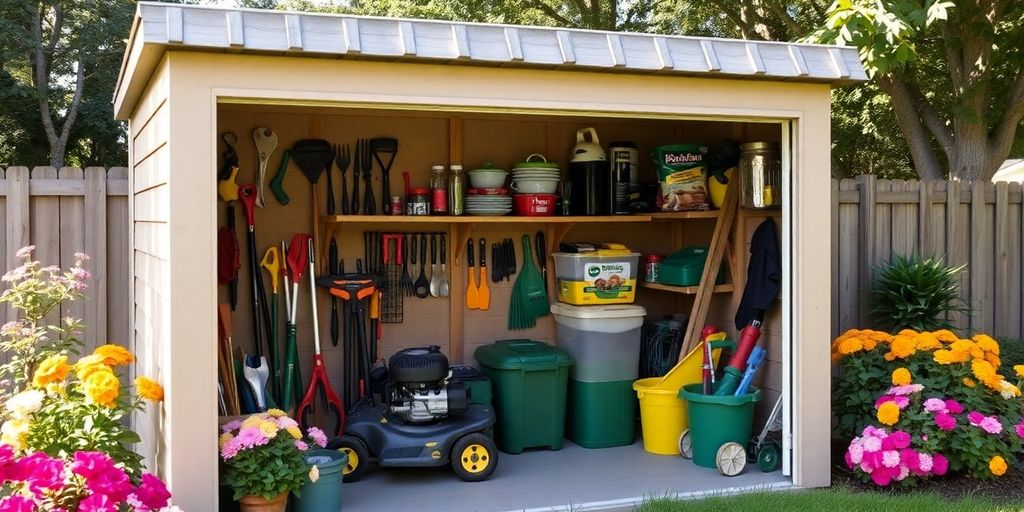
Size And Dimensions For Your Mower
Okay, so you’re thinking about getting a shed. Awesome! But before you jump in, let’s talk size. You absolutely need to measure your lawn mower. It sounds obvious, but trust me, it’s easy to underestimate. Think about the width of the mower deck, the length from handle to end, and the height, especially if you have a riding mower. Don’t forget to add a little extra wiggle room so you’re not fighting to get it in and out every time. You’ll also want to consider any attachments you might want to store with it, like a bagger or mulching kit. A lawn mower shed that’s too small is just a headache waiting to happen.
Ventilation For Airflow
Ventilation is key! You don’t want your shed to become a stuffy, humid box. Good airflow helps prevent rust and mildew, which can wreak havoc on your lawn mower and other tools. Think about adding vents near the roofline to let hot air escape. You could also consider a small window that you can open for cross-ventilation. Proper ventilation also helps dissipate any fumes from gasoline or oil, making it safer to be inside the shed. Trust me, your equipment (and your nose) will thank you.
Aesthetic Appeal And Landscaping
Let’s be real, your shed is going to be a part of your yard, so you want it to look good! Consider the style of your house and try to choose a shed that complements it. Think about the color, the roofline, and any decorative details. You can also use landscaping to help the shed blend in. Plant some shrubs around the base, add a climbing vine, or create a small garden nearby. A little bit of effort can go a long way in making your shed a stylish and functional addition to your yard.
Don’t underestimate the importance of a good foundation. A level, stable base will not only extend the life of your shed but also make it easier to move your lawn mower in and out. Consider a gravel base, concrete slab, or even a wooden platform. It’s an investment that will pay off in the long run.
Budgeting For Your Garden Shed
Cost Of Different Shed Types
Okay, let’s talk money! The cost of a garden shed can vary wildly depending on what you’re after. You’ve got your basic plastic sheds that are super budget-friendly, then you move up to metal ones, and finally, the wooden sheds, which can be a bit of an investment. Think about what you really need and how long you expect the shed to last. Don’t forget to factor in delivery costs, which can sometimes be a sneaky extra charge.
DIY Vs. Professional Installation
So, you’ve picked out your shed – awesome! Now, who’s gonna put it together? Going the DIY route can save you a chunk of change, but be honest with yourself: are you actually handy? If the thought of deciphering instructions and wielding a screwdriver fills you with dread, then professional installation might be the way to go. Sure, it’ll cost more upfront, but it could save you a major headache (and potential shed-building disasters) down the line. Plus, some companies offer warranties on their installation, which is a nice bonus. If you are handy, consider a DIY shed kit.
Long-Term Maintenance Costs
Don’t just think about the initial price tag! Garden sheds, like anything else, need a little TLC to keep them in tip-top shape. Wooden sheds might need staining or painting every few years to protect them from the elements. Metal sheds could require rust treatment. Even plastic sheds might need a good scrub-down now and then. Factor in these potential costs when you’re making your budget, so you’re not caught off guard later on. It’s always better to be prepared!
Think about the long game. A slightly more expensive shed that requires less maintenance might actually save you money in the long run. Consider the cost of materials, your time, and potential repairs when making your decision.
Enhancing Your Shed With Accessories
Okay, so you’ve got your shed, it’s the right size, and it’s ready to house your lawn mower. But why stop there? Adding the right accessories can transform your shed from a simple storage space into a super functional and organized area. Let’s explore some cool ways to trick out your shed!
Lighting Solutions For Visibility
Let’s be real, nobody wants to fumble around in a dark shed, especially when you’re trying to grab your tools. Good lighting is a game-changer. Solar-powered lights are a great option – they’re easy to install and don’t require any wiring. Plus, they’re eco-friendly! Battery-operated LED lights are another solid choice, offering bright light without the hassle of running electricity. Consider motion-sensor lights for convenience and energy saving.
Security Features To Protect Your Equipment
It’s always better to be safe than sorry, right? Securing your shed is a smart move, especially if you’re storing expensive equipment. A heavy-duty padlock is a must, but you can also think about adding window coverings or reinforcing the door. For extra peace of mind, consider a security system with alarms or even a camera. It’s all about deterring potential thieves and keeping your stuff safe.
Adding Workbenches For Maintenance
Turn your shed into a mini-workshop! A workbench gives you a dedicated space to work on your lawn mower or other garden tools. You can buy a pre-made workbench, or if you’re feeling handy, build your own. Make sure it’s sturdy and has enough surface area for your projects. Add a vise, some drawers, and you’ll be all set for maintenance and repairs.
A workbench doesn’t have to be fancy. Even a simple, solid surface can make a huge difference in how you use your shed. Think about what kind of projects you’ll be doing and customize your workbench to fit your needs. Don’t forget about good lighting above your workspace!
Wrapping It Up
So there you have it! Picking the right garden shed for your lawn mower doesn’t have to be a headache. Just think about what you need, how much space you have, and what fits your style. Whether you go for a sleek metal shed or a cozy wooden one, the goal is to keep your mower safe and sound. Plus, a good shed can really tidy up your yard and make everything look nice. So, get out there, measure your space, and find that perfect shed. Happy gardening!
Frequently Asked Questions
What materials are best for a lawn mower storage shed?
Common materials include wood, metal, and plastic. Each type has its own benefits and looks.
How can I keep my riding mower safe in an outdoor shed?
Make sure the shed is sturdy and weather-resistant. Regularly check and cover the mower to keep it safe.
Can I store my lawn mower and garden tools in the same shed?
Yes, many sheds are designed for both. Just organize them well for easy access.
What are some good storage ideas for small yards?
For small spaces, look for compact sheds or vertical storage options to save space while keeping everything protected.
Are metal sheds better for storing lawn mowers?
Metal sheds, especially those made from galvanized steel, are strong and resist rust, making them a popular choice.
How do I choose the right size shed for my lawn equipment?
Think about the size of your mower and any other tools you want to store. Getting help from professionals can make this easier.