
Does your garage feel like a cluttered mess with lawn tools scattered everywhere? You’re not alone. Many of us struggle to keep our garages organized, especially when it comes to bulky items like rakes, shovels, and hoses. But there’s good news—a lawn tool organizer for your garage can transform that chaos into a functional, tidy space. Whether you’re a DIY enthusiast or someone who just wants an easy fix, there’s a solution out there for you.
Key Takeaways
- A lawn tool organizer helps free up floor space and makes tools easy to find.
- Wall-mounted systems are great for small garages and utilize vertical space.
- Freestanding organizers are portable and don’t require wall drilling.
- DIY organizers can be customized to fit your specific garage layout.
- Proper maintenance, like cleaning and labeling, keeps your organizer efficient.
Why a Lawn Tool Organizer for Garage is a Game-Changer
Benefits of Organizing Your Lawn Tools
Let’s be honest—digging through a pile of tools every time you need something is frustrating. A lawn tool organizer changes the game by:
- Saving time: No more searching for that elusive rake or pair of gloves.
- Extending tool life: Proper storage keeps your tools in better shape, protecting them from rust and wear.
- Maximizing space: By going vertical or using smart layouts, you free up valuable floor area for other items.
Common Garage Clutter Problems
Garages tend to become dumping grounds. Here’s what happens without an organizer:
- Tools get damaged from being piled up or left on the floor.
- You waste time looking for what you need.
- The clutter makes the space feel cramped and unusable.
How an Organizer Saves Time and Space
An organizer isn’t just about neatness—it’s about efficiency. Imagine having a wall-mounted system where every tool has its place. You’ll find what you need in seconds, and your garage will feel twice as big.
A well-organized garage isn’t just visually satisfying—it makes every gardening project smoother and more enjoyable.
Creative Ways to Maximize Garage Space
Using Vertical Storage Solutions
When floor space is tight, look up! Vertical storage is a lifesaver in cramped garages. By mounting racks, hooks, or pegboards on walls, you can free up valuable floor space for your car or other projects. Here are some ideas:
- Install wall-mounted shelves for bins and boxes.
- Use pegboards to hang smaller tools and accessories.
- Add overhead storage racks for seasonal items like holiday decorations or camping gear.
This way, you’re not just organizing—you’re creating space you didn’t even know you had.
Incorporating Multi-Functional Furniture
Why settle for furniture that does just one job? Multi-functional pieces can be game-changers in your garage. Think workbenches with built-in storage or foldable tables that tuck away when not in use. Some options include:
- Rolling workbenches with drawers for tools.
- Fold-out wall-mounted tables for quick projects.
- Storage benches that double as seating.
These pieces make your garage not just organized but also incredibly efficient.
Decluttering Before Organizing
Before you dive into organizing, take a step back and declutter. It’s hard to make the most of your space when it’s filled with things you don’t need. Follow these steps:
- Sort items into "keep," "donate," and "trash" piles.
- Be honest—if you haven’t used it in over a year, do you really need it?
- Dispose of or donate items responsibly.
A clutter-free garage is the first step toward a functional and stress-free space.
Once you’ve cleared out the unnecessary, you’ll find it so much easier to plan and implement your storage solutions.
Choosing the Perfect Lawn Tool Organizer for Your Garage
Wall-Mounted vs. Freestanding Options
When it comes to picking the right lawn tool organizer, the first decision is whether you want something wall-mounted or freestanding. Each option has its perks:
- Wall-Mounted Systems: These are perfect if you’re looking to save floor space. Pegboards, hooks, and shelves can keep your tools off the ground and within easy reach. Plus, they’re great for small garages.
- Freestanding Racks: If you need something portable or don’t want to drill into your walls, freestanding racks are a solid choice. They’re sturdy and can be moved around as needed.
Think about your garage layout and how much space you want to free up before making a call.
Materials to Consider: Wood, Metal, or Plastic
The material of your organizer matters more than you might think. Here’s a quick breakdown:
| Material | Pros | Cons |
|---|---|---|
| Wood | Classic look, customizable | Can warp in humid garages |
| Metal | Durable, long-lasting | Might rust if not coated properly |
| Plastic | Lightweight, weather-resistant | May not hold heavy tools |
If your garage tends to get damp, plastic or coated metal might be the way to go. For those who love a DIY vibe, wood is super customizable.
Custom-Built Organizers for Unique Needs
Sometimes, store-bought options just don’t cut it. If you’ve got oddly shaped tools or limited space, building your own organizer could be the answer. Custom-built systems let you design around your specific needs, whether that’s extra-long slots for rakes or a dedicated spot for your leaf blower.
- Start by sketching out your ideal layout. Consider the tools you use most often.
- Use scrap wood or recycled materials for a budget-friendly build.
- Add hooks or brackets for versatility.
A little effort upfront can create an organizer that fits like a glove—and saves you from future headaches.
No matter what you choose, the right organizer can transform your garage into a tidy, efficient space. It’s all about finding what works best for your tools and lifestyle.
DIY Tips for Building Your Own Lawn Tool Organizer
Essential Tools and Materials
Before you dive in, gather all the tools and materials you’ll need. Here’s a handy list to get you started:
- Plywood or sturdy wood panels for the structure.
- A measuring tape and pencil for precise measurements.
- A saw (circular or hand saw) to cut the wood.
- Drill and screws for assembly.
- Sandpaper to smooth rough edges.
- Hooks, brackets, or pegboards for hanging tools.
- Optional: Paint or wood stain for a polished finish.
Having everything ready will make the process smoother and more enjoyable!
Step-by-Step Guide to Assembly
Building your own lawn tool organizer isn’t as complicated as it sounds. Follow these steps:
- Plan Your Layout: Decide where each tool will go and measure the space. Sketch a simple design if needed.
- Cut the Wood: Use your saw to cut the plywood into the desired sizes. For example, a large backboard and smaller peg blocks.
- Sand the Edges: Smooth out any rough spots with sandpaper to avoid splinters later on.
- Assemble the Frame: Attach the backboard to the frame using screws and a drill. Make sure it’s sturdy.
- Install Accessories: Attach hooks, brackets, or pegboards to hold your tools securely.
- Customize: Paint or stain your organizer for a more professional look, and let it dry completely before use.
Building your own tool organizer is not just practical—it’s a fun weekend project that adds a personal touch to your garage.
Finishing Touches for a Polished Look
Once your organizer is built, it’s time to add those final details that make all the difference:
- Label Your Hooks or Sections: This makes it easier to find and return tools to their proper place.
- Apply a Protective Coat: Use a sealant or varnish to protect the wood from moisture and wear.
- Test It Out: Hang your tools and adjust the layout if needed. Make sure everything is secure and easy to access.
For a simple yet effective design, consider using a wooden storage rack with peg blocks for organizing your tools. It’s a great way to keep everything tidy and off the ground!
With these tips, you’ll have a custom lawn tool organizer that’s both functional and stylish. Happy building!
Maintaining and Upgrading Your Lawn Tool Organizer
Cleaning and Protecting Your Tools
Keeping your tools clean and in good shape is half the battle when it comes to maintaining your lawn tool organizer. Here’s a quick checklist to keep your tools in top condition:
- Clean Before Storing: Always remove dirt, sap, and debris before putting tools away. A stiff brush or damp cloth usually does the trick.
- Dry Thoroughly: Moisture is a tool’s worst enemy. Make sure everything is completely dry to avoid rust.
- Use Protective Coatings: Apply a rust inhibitor or storage oil to metal parts to keep them shiny and corrosion-free.
Pro Tip: Hanging tools off the ground not only keeps them organized but also protects them from moisture and accidental damage.
Rearranging for Seasonal Needs
Your tools don’t all get equal use year-round, so it’s smart to adjust your setup as the seasons change. For example:
- Place snow shovels and ice scrapers front and center in winter.
- Move rakes and lawn mowers to an easily accessible spot in spring and summer.
- Store rarely used tools, like hedge trimmers, higher up or further back when they’re not in season.
This simple habit can save you time and hassle throughout the year.
Adding Labels for Easy Access
A little labeling goes a long way. Whether you’re using hooks, shelves, or bins, labels make it easy to find what you need at a glance. Here are a few quick ideas:
- Use pre-made adhesive labels or make your own with masking tape and a marker.
- Color-code sections of your organizer for different tool types (e.g., green for gardening tools, blue for repair tools).
- Add tags to larger tools, like shovels, to identify their specific use.
Bonus Tip: If you share your garage with family members, labels can help everyone stay on the same page and keep things tidy.
Keeping your lawn tool organizer maintained and upgraded doesn’t have to be a chore. With these simple steps, your garage will stay organized, and your tools will last longer.
Hidden Storage Hacks for Small Garages
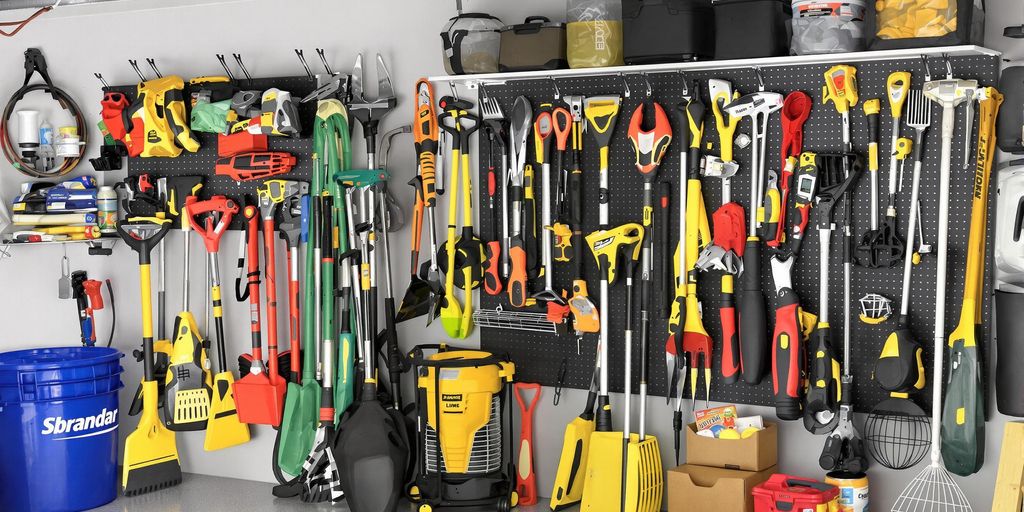
Utilizing High Spaces Effectively
If everything in your garage is within arm’s reach, you’re missing out on prime storage real estate. Think about the space near the ceiling! Install deep shelves or cabinets up high to store seasonal items like holiday decorations or camping gear. This keeps your floor space clear while making use of often-overlooked areas.
Here’s a quick guide to get started:
- Use sturdy brackets or ceiling-mounted racks to ensure safety.
- Label storage bins clearly so you know what’s inside without pulling everything down.
- Place less-used items up high and keep frequently needed tools lower for convenience.
Making Use of Corners and Doors
Corners and doors often get ignored, but they can be lifesavers in a small garage. Add corner shelves or install a pegboard behind the door for hanging tools. Over-the-door hooks work wonders for lightweight items like extension cords or gardening gloves. For corners, consider a spinning shelf or custom-built rack to maximize every inch.
Compact Solutions for Tight Spaces
When you’re working with a tight garage, every inch counts. Opt for compact storage solutions like:
- Foldable workbenches that tuck away when not in use.
- Slim cabinets that fit between your car and the wall.
- Magnetic strips or small bins for organizing hand tools.
Small garages don’t have to mean small storage potential. With a little creativity, you can turn even the tiniest space into an organized haven.
Wall-Mounted Wonders: The Ultimate Space-Saving Solution
Benefits of Wall-Mounted Systems
Wall-mounted storage systems are a total game-changer when it comes to organizing your garage. They free up valuable floor space, making your garage feel bigger and more functional. Plus, everything is within arm’s reach, so no more digging through piles of tools to find what you need. These systems also keep your tools off the ground, protecting them from moisture and rust. And let’s not forget—they just look neat and tidy, which is a bonus!
How to Install Hooks and Pegboards
Installing hooks and pegboards is easier than you might think. Here’s a quick guide to get you started:
- Plan Your Layout: Decide where you want your tools to go. Group similar items together—like rakes, shovels, and brooms—to make the most of the space.
- Find the Studs: Use a stud finder to locate the studs in your garage wall. This ensures your hooks and pegboards will hold heavy tools without coming loose.
- Mount the Pegboard: Drill screws into the studs and secure the pegboard. Make sure it’s level!
- Add Hooks and Accessories: Attach hooks, baskets, or shelves to the pegboard. Adjust as needed to fit your tools.
Organizing Tools by Frequency of Use
Not all tools are created equal—some you use daily, others only a few times a year. Organize your tools based on how often you use them:
- Everyday Tools: Keep frequently used items like hammers, screwdrivers, and tape measures at eye level for easy access.
- Seasonal Tools: Store tools you only need occasionally, like snow shovels or leaf blowers, higher up on the wall.
- Rarely Used Tools: Place these at the very top or in less accessible corners. Think of it as your garage’s “attic” space.
A wall-mounted system isn’t just about saving space—it’s about making your garage work for you. With a little effort upfront, you’ll save loads of time and stress in the long run.
For anyone looking to simplify their garage setup, consider a wall mount designed for skis and tools to keep everything organized and clutter-free. It’s a small investment with big returns!
Eco-Friendly and Budget-Friendly Organizer Ideas
Repurposing Old Furniture for Storage
Got an old dresser or bookshelf you’re thinking of tossing? Don’t! Repurpose it into a unique storage solution for your garage. For example:
- An old dresser can become a tool station—just remove the top drawers and add hooks for hanging tools.
- Turn a broken bookshelf into a gardening supply rack by adding baskets or bins to the shelves.
- Even a worn-out ladder can be transformed into a quirky, vertical shelving unit.
These ideas not only save money but also keep unnecessary waste out of landfills.
Using Recycled Materials Creatively
Think outside the box when it comes to recycled materials. Here are some clever ways to upcycle items you might already have:
- Use mason jars or coffee cans to store screws, nails, and other small items. Attach the lids to the underside of a shelf for easy access.
- Transform wooden pallets into a wall-mounted organizer by adding hooks and shelves.
- Use an IKEA Grundtal rail with utensil holders and S-hooks to neatly store small gardening tools like trowels and pruners.
Not only are these projects eco-friendly, but they’re also fun to put together!
Affordable Options for Every Budget
You don’t need to break the bank to get organized. Here are some budget-friendly ideas:
- Dollar store finds: Look for bins, hooks, and baskets that can be used to organize tools and supplies.
- DIY pegboards: A simple pegboard can be customized to fit your needs and costs very little to set up.
- Garage sales: Keep an eye out for second-hand items like shelves or bins that can be repurposed.
A little creativity goes a long way when you’re on a budget. Even the simplest solutions can make a big difference in keeping your garage tidy and functional.
Conclusion
So there you have it! Getting your garage organized with a lawn tool organizer doesn’t have to be a huge project. With a little planning and some simple tools, you can turn that cluttered space into a neat and functional area. Not only will it save you time and frustration, but it’ll also help keep your tools in great shape for years to come. Give it a try—you might even enjoy the process! And hey, once it’s done, you’ll wonder why you didn’t do it sooner.
Frequently Asked Questions
What is the best way to organize lawn tools in a garage?
Using vertical storage solutions like wall-mounted hooks, pegboards, or shelves can help keep tools off the floor and save space.
Are wall-mounted organizers better than freestanding ones?
Wall-mounted organizers are great for saving floor space, while freestanding options are more portable and don’t require drilling into walls.
How do I decide between wood, metal, or plastic organizers?
Wood offers a classic look, metal is durable, and plastic is lightweight and weather-resistant. Choose based on your needs and budget.
Can I build my own lawn tool organizer?
Yes, with some basic tools and materials, you can create a custom organizer that fits your space and specific needs.
How do I maintain my lawn tool organizer?
Clean it regularly, protect it from moisture, and rearrange tools seasonally to keep it functional and organized.
What are some budget-friendly storage options?
Repurposing old furniture, using recycled materials, or buying affordable wall hooks and pegboards are great cost-effective solutions.